How Basketball Club Teams in San Diego Build Future Stars
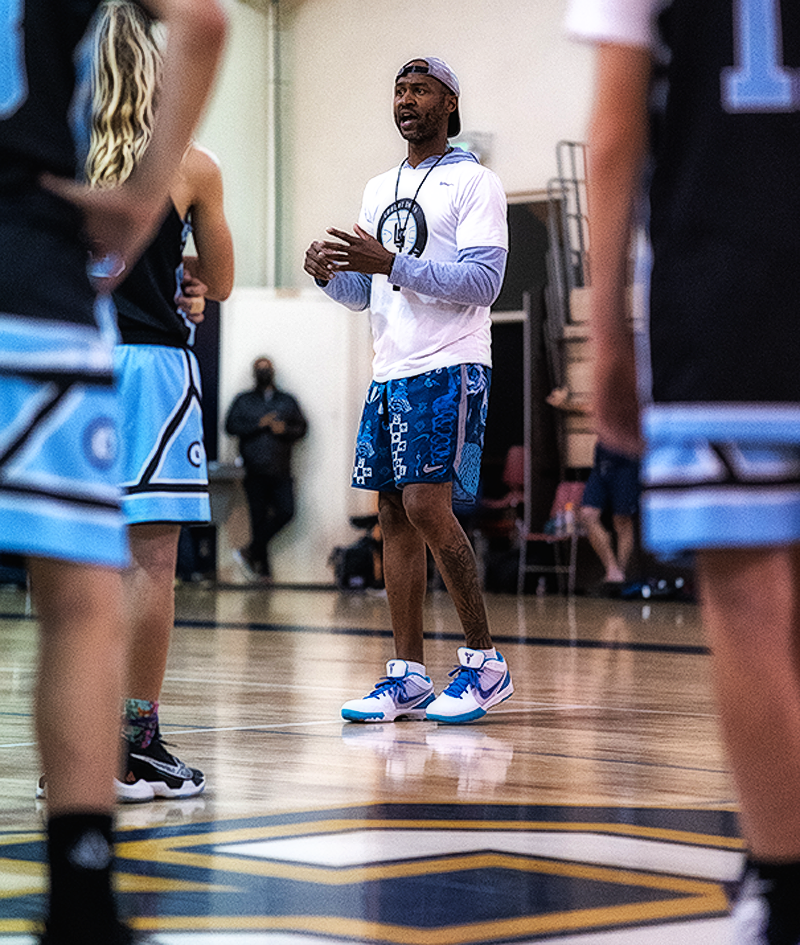
San Diego has always had the climate, the population, and the athletic culture to support serious basketball. What has changed over the past decade is the level of structure around player development. Club programs are no longer just places where talented kids go to play extra games on weekends. The best ones function more like long-term training environments, part classroom, part laboratory, part proving ground. That shift matters for families trying to understand how young players actually improve, and why some athletes in the region make meaningful jumps while others stay stuck in place.
When people talk about Basketball Club Teams San Diego parents hear about exposure, travel schedules, shoe circuits, rankings, and scholarships. Those things get attention because they are visible. What is less visible, and far more important, is the daily work that shapes a player before anyone outside the gym knows their name. Future stars are usually built through repetition, honest coaching, role clarity, and competitive environments that demand better habits. The game-day highlights come much later.
San Diego presents an especially interesting case because the area sits between multiple basketball identities. It has the laid-back coastal sports culture many outsiders associate with Southern California, but it also has fierce local competition, strong cross-border influence, and access to major recruiting hubs in Los Angeles, Orange County, Arizona, and Las Vegas. A club team in this region cannot survive on reputation alone. It has to produce.
The difference between playing more and developing better
A common mistake families make is assuming that any additional basketball is good basketball. More games can help, but only if the player is learning within those games. There is a real difference between adding volume and building skill.
In strong club environments, coaches do not simply roll out the ball and let athletic kids dominate. They teach spacing, timing, pace changes, weak-side reads, closeout angles, transition decision-making, and how to play through mistakes. The work may not look flashy from the bleachers. It often shows up in details that only coaches notice at first, such as a guard getting two feet in the paint before making a kick-out pass, or a wing tagging the roller before recovering to the corner shooter.
Those habits separate players who peak early from players who keep climbing. I have seen middle school athletes in San Diego look unstoppable because they were stronger and faster than everyone else. By sophomore year, the gap disappeared. The players who stayed relevant were usually the ones who had been taught how to process the game, not just survive it on talent.
Club basketball, when done well, accelerates that process. It exposes a player to better opponents, more sophisticated schemes, and higher expectations. It also reveals weaknesses faster. That can be uncomfortable, but discomfort is often the start of real growth.
Why San Diego is a strong development market
San Diego is large enough to support diverse club ecosystems and compact enough that talented players still end up crossing paths. That combination creates healthy pressure. Coaches know who is developing players. Parents talk. High school coaches watch. Trainers compare notes. Over time, a local reputation forms, and it usually reflects substance more than marketing.
Another advantage is year-round training weather. Players in colder parts of the country often deal with seasonal disruptions. In San Diego, workouts can happen consistently. Outdoor courts stay active. Strength training does not stop when winter arrives. Recovery routines are easier to maintain. That continuity matters more than many people realize. Player development is usually not one dramatic breakthrough. It is fifty ordinary weeks stacked the right way.
The region also benefits from a mix of playing styles. Some clubs lean into up-tempo, attacking basketball. Others teach a more methodical half-court approach. Because teams travel and scrimmage widely, players learn to adjust. A forward who thrives in a fast game on Saturday may have to execute in a physical, grind-it-out setting on Sunday. That range prepares athletes for high school varsity basketball, and later for college systems that may not cater to their preferred tempo.
Great club teams build habits before they build résumés
Parents often ask the wrong early question. They want to know whether a club can get their child recruited. The better question is whether that club can teach the player how to become recruitable.
The strongest programs in San Diego are usually clear about this. They know that exposure without preparation is mostly wasted. A college coach can spot potential quickly, but that same coach can also spot poor fundamentals, bad body language, defensive lapses, and inconsistent motor within a few possessions.
That is why the best club coaches focus heavily on habit formation. They teach players to sprint into defensive positioning, communicate screens early, make simple reads under pressure, and stay engaged even when they are not getting touches. Those habits do not always trend on social media. They do, however, win trust with high school coaches and evaluators.
I remember watching a lean ninth-grade guard at a San Diego event who barely scored all weekend. No one in the stands was buzzing about him. Yet every possession he picked up the ballhandler, got the team organized, made the extra pass, and defended without gambling. Two years later he was one of the most valued guards in his class, not because he suddenly became a star overnight, but because the foundation had already been built. The game slowed down for him while other players were still trying to prove they belonged.
Coaching matters more than branding
There are club teams with sharp uniforms, polished logos, and packed social media pages. Some are excellent. Some are not. Branding can create attention, but it cannot substitute for teaching.
A serious development coach watches feet, not just outcomes. If a player makes a layup but takes a poor angle, the rep gets corrected. If a shooter hits three jumpers with a drifting base, that is still a problem. https://ricardorymh437.urbanvellum.com/posts/basketball-club-teams-san-diego-and-the-pursuit-of-excellence If a post player scores over smaller defenders but cannot seal properly, the points are almost beside the point. Elite youth coaching requires the patience to fix the process before the results become urgent.
In San Diego, where basketball options are plentiful, the best clubs usually earn loyalty through technical instruction and communication. Families stay when they believe a coach sees the player clearly. That means being honest about current strengths, realistic about weaknesses, and disciplined enough not to promise impossible timelines.
The toughest conversations are often the most valuable. A player may need to hear that they are a wing, not a point guard. Another may need to stop chasing contested step-backs and become a defensive specialist first. Not every teenager likes that message. But club coaches who protect a player’s ego at the expense of development usually delay growth.
Skill work is only part of the equation
When people imagine basketball development, they usually picture ball-handling drills, form shooting, cone work, and finishing moves. Those skills matter. But future stars are rarely built by skill work alone.
Physical development changes everything, especially from ages 12 to 18. A club team that understands this will pay attention to movement quality, strength foundations, balance, and recovery. That does not mean turning young athletes into bodybuilders. It means helping them become more durable, more explosive, and more efficient.
A player who improves lateral strength can suddenly stay in front of better guards. A big who develops hip mobility can run the floor harder and defend in space. A shooter who gets stronger through the legs and core can hold mechanics deeper into games. Those gains are often subtle from week to week, but they show up dramatically over a season.
There is also the mental side, which gets talked about often and taught unevenly. Good club programs do not use “mental toughness” as a slogan. They create environments where it has to be practiced. That can mean competing for minutes, owning mistakes in film sessions, responding after a poor tournament, or learning to contribute when the offense is not running through you. Mental growth is rarely abstract. It is tied to specific moments when a player decides whether to fold, force the issue, or adjust.
Competition reveals what training cannot
Practice can sharpen tools, but competition reveals whether those tools hold up under stress. That is one reason club basketball is so influential in places like San Diego. Players are regularly tested against opponents they do not know, in gyms that are loud, cramped, hot, and unforgiving.
Those settings expose truth quickly. A guard who looks smooth in workouts may struggle against length and pressure. A prolific scorer may find that better teams load up on every touch. A dominant rebounder may discover that physicality increases against older age groups. None of that is bad news. In fact, it is often the most useful information a player can get.
The best clubs do not hide from that information. They study it. They use tournament results to guide training plans. If a team cannot handle traps, the next practice addresses ball reversals and outlet spacing. If wings are losing track of backside action, coaches revisit shell work and rotation language. If late-game execution fails, they rehearse end-of-clock situations instead of blaming effort.
This is where weak programs and strong ones start to separate. Weak programs chase the next tournament. Strong programs connect each tournament to the next phase of development.
The role of culture inside Basketball Club Teams San Diego
Culture is one of those words that gets overused, but it matters in youth basketball because the sport constantly tests character in public. Players sit on benches, miss shots, turn the ball over, get corrected by coaches, and compare themselves to teammates. Any club team operating in San Diego long enough will deal with frustration, politics, disappointment, and families who expect more than the current reality supports.
A healthy culture does not eliminate those tensions. It gives them structure.
Players need to know what earns trust. Is it scoring, or is it defending, communicating, and being coachable? Do older players welcome younger talent, or treat them like threats? Does the staff demand accountability from the best athlete on the roster, or only from role players? Teenagers notice these things faster than adults think.
The strongest club cultures are not always the loudest. Sometimes they are the gyms where expectations are clear, practice starts on time, film is honest, and everyone understands that playing time is attached to responsibility. That kind of environment produces steadier improvement because energy is not wasted on guessing games.
I have seen average teams become very good teams simply because they trusted their identity. I have also seen talented teams flatten out because no one wanted to confront poor habits from their top players. Talent can win on a weekend. Culture usually determines what happens over two or three years.
Exposure helps, but timing matters
Recruiting talk shows up earlier every year, and it often distorts good decision-making. Families start chasing visibility before the player is ready for it. That can lead to bad fits, inflated expectations, and constant movement from team to team.
Exposure has value, but the timing has to make sense. College coaches and evaluators are looking for translatable traits. If a player has not yet developed a clear identity, exposure can create more confusion than momentum. Being seen is not the same as being remembered.
The players who benefit most from club exposure are usually the ones who can answer a simple question: what do you do well enough that a higher-level coach can trust you? Maybe it is on-ball defense. Maybe it is shooting off movement. Maybe it is rim protection, passing feel, or downhill creation. Whatever the answer, it needs to show up consistently against quality competition.
This is where many Basketball Club Teams San Diego have improved in recent years. Better programs are more selective about when and where they place players in front of evaluators. Rather than promising every family constant attention, they focus on readiness. That may mean spending one season in heavy development mode before entering higher-profile circuits. It may mean playing up an age group for growth rather than staying where a player can dominate. It may mean accepting fewer touches in a stronger lineup because the habits built there will matter later.
Parents shape the process more than they realize
No serious conversation about club basketball is complete without discussing parents. Their influence can be stabilizing or disruptive, sometimes within the same season.
The best parent support tends to be boring in the healthiest way. It looks like consistency. Getting the athlete to practice on time. Prioritizing sleep and nutrition. Listening more than lecturing after games. Choosing a program for fit rather than status. Trusting development when short-term results are uneven.
Problems usually start when adults confuse motion with progress. A player changes teams three times in eighteen months, gets praised for scoring thirty against weak competition, and never stays anywhere long enough to be coached hard. That pattern is common, and it often leaves talented kids underdeveloped by the time high school becomes serious.
A useful rule for families is simple:
- Choose teaching over hype.
- Ask how the program develops players between tournaments.
- Look at who improved after joining, not just who was already talented.
- Pay attention to role clarity and accountability.
- Give the fit enough time to work unless there is a genuine problem.
That kind of patience can be difficult, especially in a competitive market. But player development is rarely linear. There are stretches where confidence dips, roles change, or physical growth temporarily throws off timing and coordination. Families who understand that tend to make better long-term decisions.
Not every future star looks like one at 13
This may be the most important truth in youth basketball, and one the best club coaches in San Diego understand deeply. Early dominance is not destiny. Neither is early struggle.
Some players mature physically years before their peers. They grab attention quickly, but later need to adjust when size advantages disappear. Others are late bloomers, awkward for a while, still growing into their bodies, not yet strong enough to finish through contact or hold their line defensively. Those athletes can make enormous jumps when the physical catch-up finally arrives.
That is why thoughtful club coaches evaluate trajectory, not just current production. They notice balance, touch, instincts, timing, and willingness to learn. They can see whether a raw player is teachable and whether their game will scale upward as competition improves.
One of the more revealing signs is how a young athlete responds to correction. The players who eventually separate are not always the most polished early on. Often they are the ones who can absorb feedback, apply it, and return the next week a little better. Over months, that compounds.
San Diego has produced plenty of players who were not youth sensations but became impact varsity players and legitimate college prospects. Their path was not glamorous. It was steady. A good club environment makes room for that kind of growth instead of only chasing immediate wins.
What separates a strong club program from a travel team with a schedule
This distinction matters because the labels can look similar from the outside. A team may travel, enter respected events, and still do very little actual development. Another may have fewer bells and whistles but transform players over time.
A strong club program usually shows its value in several ways. Practices have purpose. Feedback is specific. Roles are defined, then revisited as players improve. The team runs offensive and defensive concepts that teach transferable basketball, not just youth-level gimmicks. Coaches communicate with families clearly and do not hide behind vague promises. Most of all, players get better in visible, measurable ways.
Sometimes that improvement is statistical, but often it is functional. A wing starts making quicker decisions. A post player learns to defend ball screens. A guard stops overdribbling and becomes more efficient. These are the changes that open future doors.
Here is the other side of the trade-off. Real development can be slower and less comfortable than a hype-driven experience. Players may not always be featured. They may have to earn roles. They may hear difficult truths. But that environment is usually where future stars are formed, because stars at the next level are not built on comfort.
The path forward for San Diego basketball
San Diego basketball is in a healthy phase. There is more knowledge in the ecosystem now than there was years ago. Training methods are better. Film access is easier. Families are more informed, even if information overload remains a challenge. High school and club relationships, while not perfect, are generally more connected around the shared goal of preparing players for tougher competition.
The next step is continuing to value substance over noise. The region does not need more branding. It needs more patient development, more honest evaluation, and more coaches willing to teach the parts of basketball that do not show up in highlight clips.
Future stars will keep emerging from this city, not because they found the flashiest path, but because they found demanding environments and stayed long enough to grow. The best Basketball Club Teams San Diego offer exactly that. They teach players how to think, compete, adapt, and carry responsibility. They make young athletes confront their weaknesses before the rest of the basketball world does. And when that work is done well, the results eventually become obvious.
By the time a player is being called a prospect, a standout, or a future college contributor, most of the important work has already happened in ordinary gyms, on ordinary weeknights, under coaches who cared more about habits than applause. That is how stars are really built. Not all at once, and never by accident.
Lamont Smith Basketball Academy
888 Clairemont Mesa Blvd Suite T-2, San Diego, CA 92123
(619) 639-8778
FAQ About Basketball Club Teams San Diego
How can a player join an LSBA club team?
Players are evaluated during practices so the coaching staff can recommend an appropriate team and development level. Families should contact the academy to confirm current openings and evaluation details.
Are club teams available for newer basketball players?
Yes. LSBA describes multiple levels, including a developmental option for newer players as well as more competitive teams for athletes with prior club experience.
What do LSBA club team practices emphasize?
Practices emphasize basketball fundamentals, team defense, structure, communication, and player development. The specific focus may vary according to the team and experience level.
Do all LSBA teams travel?
Travel expectations vary by level. Some teams focus on local competition, while advanced teams may participate in tournaments elsewhere in Southern California or beyond. Families should confirm the current schedule before enrolling.